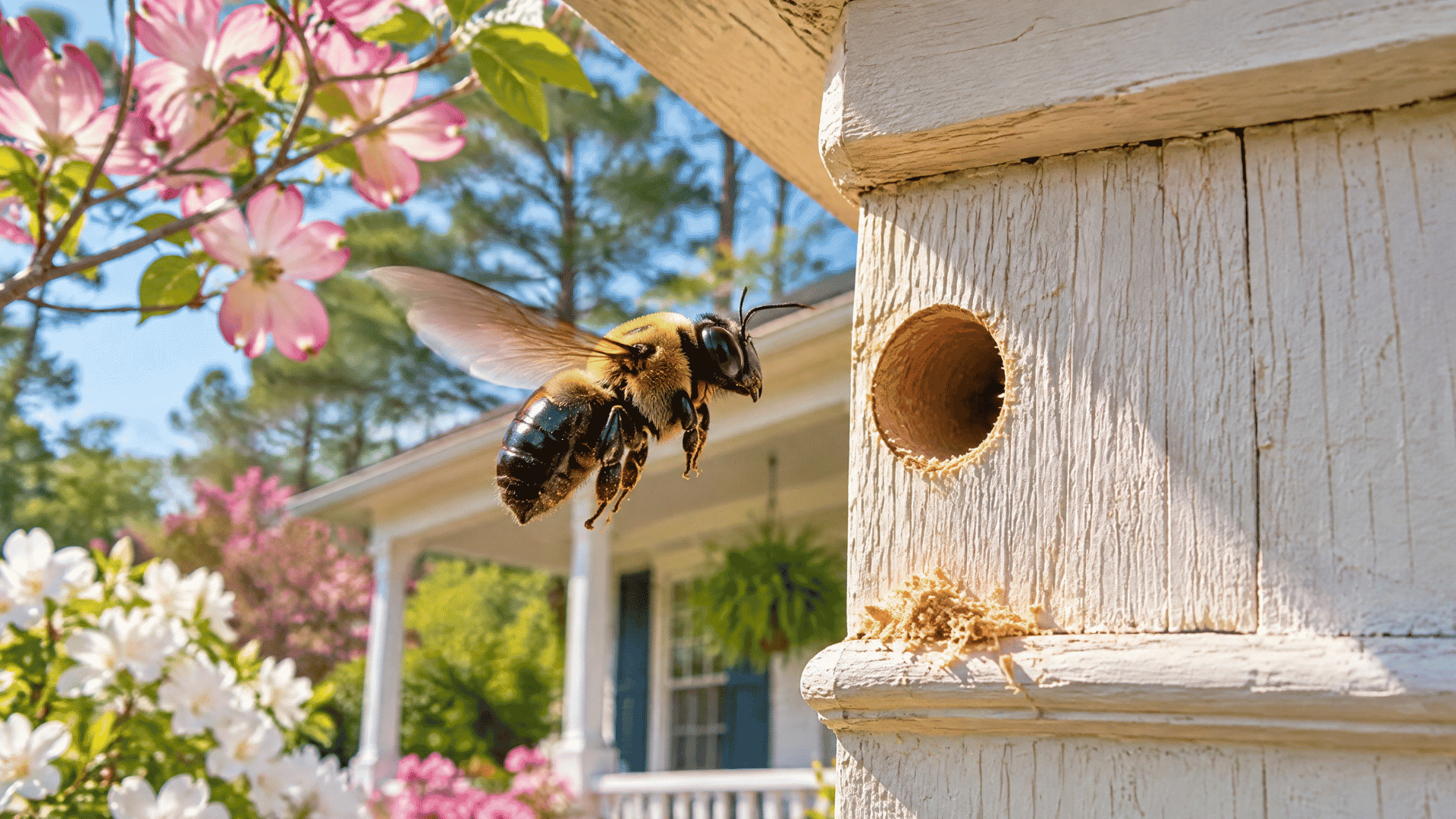
Every spring, large black bees show up around porch rails, deck boards and the eaves of homes across the Triangle. They hover, they dart at you, and a few weeks later you may notice a perfectly round hole in your trim. That hole is often the first sign of carpenter bee damage, and it is much easier to deal with when you catch it early. This guide walks you through what to look for, where to look, and what to do before the problem grows.
We're writing this ahead of the season on purpose. The best time to plan for carpenter bees is before they start drilling, so you know exactly what you're looking at when the first bees appear. A few minutes of looking now can save you a board replacement later.
Quick Summary
- Carpenter bees usually come out in North Carolina in April and May, and the females start drilling new nest tunnels soon after.
- The first sign of carpenter bee damage is a round hole about half an inch wide, often with fresh sawdust and yellowish stains below it.
- They favor bare, weathered softwood such as fascia boards, deck rails, eaves, siding and outdoor furniture.
- One season of drilling rarely causes serious harm, but the same wood attacked year after year can weaken and start to rot.
- Woodpeckers hunting for bee larvae can tear up wood far more than the bees do.
- Painting bare wood, sealing old holes the right way and getting a professional inspection are your best moves.
What Carpenter Bees Are and Why They Drill
Carpenter bees are large, solitary bees that nest inside wood. They look a lot like bumble bees, but the easiest way to tell them apart is the abdomen. A carpenter bee has a shiny, mostly hairless black abdomen, while a bumble bee's is fuzzy and striped with yellow.
They Nest in Wood, They Don't Eat It
Unlike termites, carpenter bees don't eat wood. The females chew tunnels to create a safe place to raise their young, then push the sawdust out of the hole. Inside each tunnel, a female builds a row of small cells, stocks each one with a ball of pollen, and lays an egg on it. That is why the damage is all about tunnels and holes rather than the soft, hollowed wood you see with termites.
Why They Keep Coming Back to the Same Spot
Carpenter bees spend the winter as adults, often tucked inside old tunnels. When spring arrives, females dig new tunnels, and they also enlarge and reuse old ones. According to NC State Extension, carpenter bees in North Carolina typically emerge in April and May, and a tunnel that is reused for several years can stretch several feet through the wood. This repeat use is what turns a small cosmetic problem into real carpenter bee damage over time.
When Carpenter Bee Season Starts in the Triangle
In Holly Springs, Apex, Cary and the rest of Wake County, carpenter bee activity tends to line up with the first stretch of warm spring weather. You'll usually see the males first. They're the ones hovering near your porch or deck, buzzing at anyone who walks by.
Males Hover, Females Drill
The good news is that the males can't sting at all. They're territorial and look intimidating, but they're harmless. Males also have a pale or whitish spot on the front of the face, which is an easy way to tell them apart. The females can sting, but they rarely do unless they're handled or trapped against your skin.
Why Early Spring Matters Most
A few weeks after they emerge, females begin drilling new tunnels and laying eggs. If you spot activity in this window, you're seeing the problem at its smallest. Once the tunnels are full of developing bees, the next generation is already set to come back to the same wood the following year.
How to Spot Early Carpenter Bee Damage
Most homeowners notice the bees long before they notice the holes. That's because carpenter bees often drill into the undersides of boards, where people rarely look. Here are the signs to check for when you walk around your home:
- The entrance hole: a clean, nearly perfect circle about half an inch across, as if someone used a drill bit.
- Fresh sawdust: small piles of coarse, light-colored sawdust on the ground, deck or railing just below the hole.
- Yellow streaks: a yellowish trail of waste on the surface just below the hole.
- Tunneling sounds: on a quiet day, you can sometimes hear a female chewing inside the wood.
- Bees going in and out: a bee that disappears into a hole and comes back out is a sure sign of an active nest.
Where to Look Around Your Home
Carpenter bees prefer bare, weathered softwood like pine, cedar and cypress. The University of Kentucky notes that painted or pressure-treated wood is much less likely to be attacked. Around a typical Wake County home, these are the spots worth checking first: fascia boards and the trim along your roofline, the eaves, the undersides of deck and porch rails, exposed rafters, wood siding, sheds and wooden outdoor furniture.
Telling Fresh Damage From Old Holes
Not every hole you find is active. Fresh sawdust or a new yellow stain below a hole is the clearest sign that a bee is working there now. A hole with nothing beneath it may be old, but bees can still enlarge and reuse it next spring. Snap a photo of each hole you find and note where it is, so you can check later whether it has changed.
Why a Few Holes Can Turn Into Real Damage
One carpenter bee drilling one tunnel doesn't usually threaten your home. The trouble is what happens over several seasons. Each new generation adds tunnels or lengthens old ones in the same boards, so wood that looks fine from the outside can hide long tunnels inside.
Water and Rot
Holes in the surface of your wood also let water in. Over time, that water can lead to rot and decay, which weakens the board further. Badly damaged wood may end up needing to be replaced, which is a bigger job than sealing a few holes.
Woodpeckers Make It Worse
Woodpeckers are drawn to the sound of bees working inside the wood, and they will tear it open to reach the larvae. The University of Georgia Extension notes that woodpeckers hunting for carpenter bee larvae can break apart the wood and cause structural damage. If you see ragged, splintered gouges around a round hole, woodpeckers have likely found a nest. At that point, the carpenter bee damage may run deeper than the hole suggests.
Carpenter Bees vs. Termites: Know the Difference
Because both insects damage wood, homeowners sometimes worry that carpenter bee holes mean termites. They're very different problems. Carpenter bees work on the outside of your home, in exposed wood you can see, and they leave round holes and sawdust behind.
Subterranean termites, on the other hand, work out of sight. They travel through mud tubes from the soil and eat wood from the inside, usually without leaving any clean holes or sawdust at all. If you're seeing mud tubes, soft or buckling wood, or winged insects indoors in spring, that's a different conversation, and our termite control and prevention page is a good place to start.
What You Can Do Before the Bees Return
There's a lot a homeowner can do safely, especially in the months before carpenter bees come back. None of these steps involve spraying anything. They're about making your wood less inviting and keeping track of what you find:
- Paint bare wood. Carpenter bees are far less likely to drill into painted surfaces. Stains and sealers help some, but a good coat of paint works better.
- Replace badly damaged boards. If a piece of trim or a rail is riddled with holes or soft from rot, replacing it removes the old tunnels bees would come back to.
- Walk your home in early spring. Check the spots listed above and photograph any holes, sawdust or stains you see.
- Keep sheds and garages closed during the weeks when bees are looking for nesting spots.
- Time your plugging. Plugging an active hole works best after the tunnel has been treated, so plan it with the treatment rather than on its own.
The Right Way to Seal Holes
Sealing holes is important, but timing and order matter. The approach extension entomologists describe is to treat the active tunnel first, leave the hole open for a few days so the treatment spreads through the tunnel, and then plug it with a wood dowel coated in glue, putty or another sealant. A plugged hole helps keep future bees out of the old tunnel and keeps water out of the wood. Repainting the area afterward makes the board less inviting next spring.
How a Professional Inspection Helps
Carpenter bees often nest in places that are hard to reach, like second-story fascia, high rooflines and deck undersides. A trained technician can find active tunnels you might miss, tell fresh damage from old, and spot conditions like rot or woodpecker damage that need attention. Carpenter bees are on the list of pests our residential pest control team handles in homes across Holly Springs, Fuquay-Varina, Apex, Cary and the 540 corridor.
What to Expect From Ready Pest Solutions
Our owner, Philip, is an Associate Certified Entomologist (ACE), and we approach carpenter bees the same way we approach every pest: by finding the root cause. Every relationship starts with a free inspection, where we look at your home, show you what we found and recommend a plan. We use entomologist-selected, EPA-registered products, and there's never any pressure. We explain what we found, and you decide.
Year-Round Protection Makes Spring Easier
If carpenter bees, wasps and other spring pests seem to show up at your home every year, steady service tends to work better than reacting to each problem as it appears. You can read more about why in our post on year-round pest control vs. one-time visits. Getting ahead of the season means fewer surprises when the weather warms up.
Frequently Asked Questions
What does carpenter bee damage look like?
The first sign is a round, clean hole about half an inch wide, usually on the underside or edge of exposed wood. You'll often see coarse sawdust below the hole and yellowish stains on the surface beneath it. Over several seasons, the wood around the holes can weaken, rot or be torn open by woodpeckers.
Are carpenter bees dangerous?
Not usually. Male carpenter bees can't sting, even though they hover close and act aggressive. Females can sting but rarely do unless they're handled or trapped.
Can carpenter bees ruin my deck or porch?
A few holes in one season are mostly cosmetic. The risk comes when bees return to the same boards year after year, extending their tunnels and letting water in. That's why catching carpenter bee damage early and sealing it the right way matters.
Does painting wood stop carpenter bees?
Painting bare wood is one of the best ways to discourage them, because they strongly prefer unpainted, weathered surfaces. It isn't a guarantee, since they can still attack painted wood at times, but it lowers the odds a great deal.
When should I call a professional?
Call when you see active bees going in and out of holes, find several holes in the same area, notice woodpecker damage, or can't safely reach the spots where bees are drilling. A professional can treat active tunnels and help you plan how to seal and protect the wood.
Get Ahead of Carpenter Bees This Spring
Carpenter bees are predictable. They come back each spring, they favor the same kinds of wood, and they often return to the same holes. That predictability works in your favor if you know what to look for and act before the damage builds up.
If you've spotted round holes, sawdust or hovering bees around your home, or you'd simply like a trained set of eyes on your trim and deck before the season starts, contact Ready Pest Solutions. We'll take a look, explain what we found and help you decide on the next step, with no pressure.