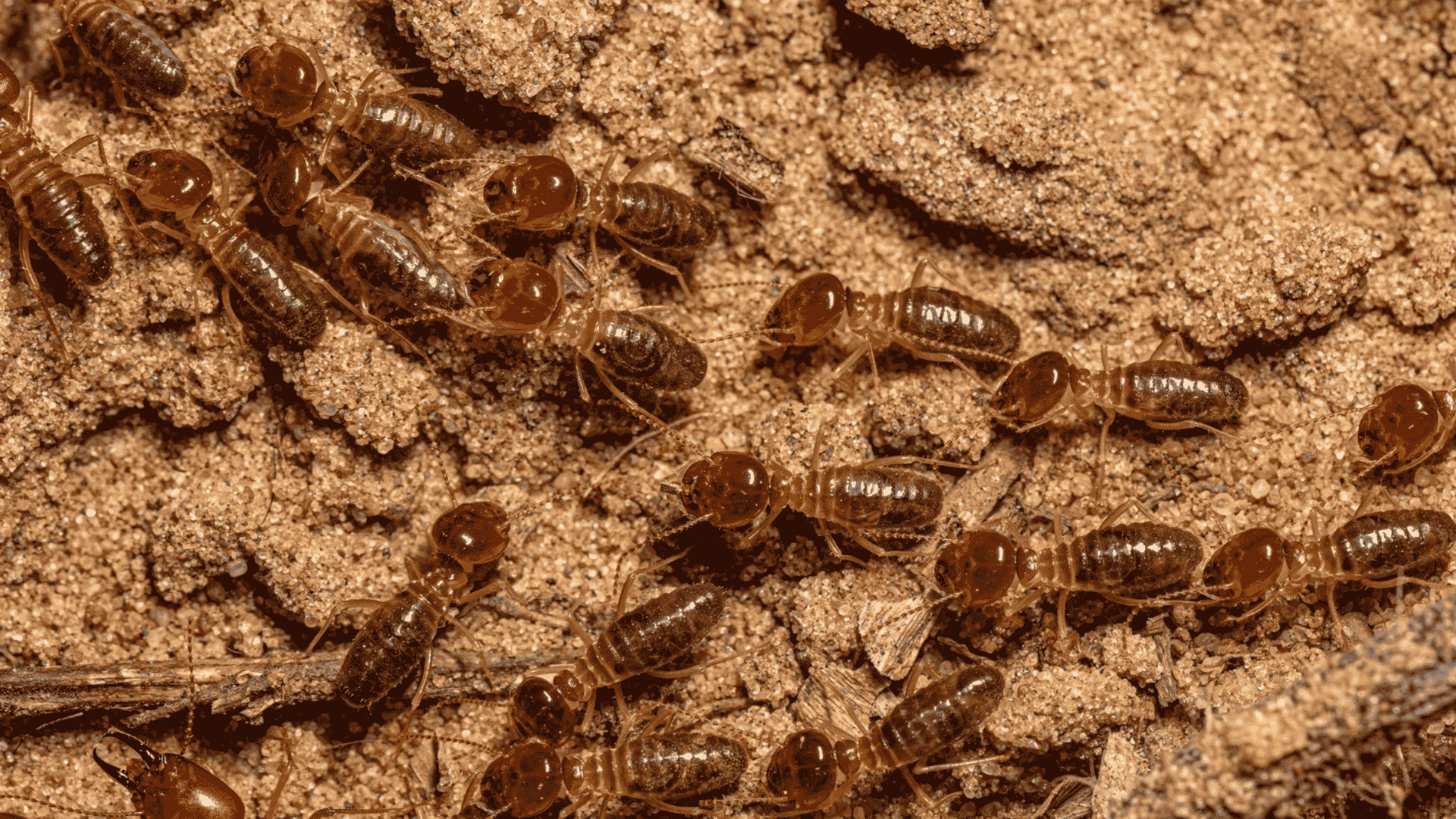
Termite swarm season in North Carolina doesn't wait for a calendar date. One warm afternoon after a rain, a cloud of small winged insects can pour out of a windowsill or drift up from the edge of a patio, and most homeowners have no idea what they're looking at. The swarm itself lasts a short time. What it tells you about your home lasts much longer, and that's why it pays to know what to watch for before the season arrives.
In the Triangle, termites are part of the landscape. They live in the soil around homes in Holly Springs, Apex, Cary, Fuquay-Varina and across Wake County. A swarm is the moment they become visible, and knowing how to read it helps you respond calmly instead of guessing.
Quick Summary
- Termite swarm season in NC can start in late winter and run into early fall, and swarms usually happen during the day, often on warm days after rain.
- Swarmers are the winged adults a mature colony sends out to start new colonies. A colony needs several years to grow before it swarms at all.
- Swarmers out in the yard aren't proof your house has termites. Swarmers indoors usually point to an active infestation in the structure.
- In the first hour, collect a few specimens, take photos, note where they came from, and clean up the rest. Don't spray.
- The swarmers aren't the threat. The established colony that produced them is, and it calls for a professional inspection.
What Termite Swarm Season Looks Like in North Carolina
A termite swarm is a mating flight. Inside a mature colony, some young termites develop into winged adults, and when conditions are right, they leave the nest all at once. They fly a short distance, drop to the ground, shed their wings, pair off, and try to start new colonies in the soil.
When Swarms Happen
According to NC State Extension, North Carolina has at least three native species of subterranean termites, and they begin swarming in late winter and continue into September or October. Swarming usually happens during the day, especially on warm days that follow rain. That long window is why termite swarm season isn't one single week you can circle. It shifts with the weather each year.
Even so, spring is when most homeowners notice them. University of Kentucky entomologists note that spring is typically when large numbers of swarmers emerge inside homes, triggered by warmer temperatures and rainfall. The best time to learn the signs is before the first warm, rainy afternoon of the year.
Where Swarms Show Up Around the Home
Swarmers are drawn to light, so indoors they gather near windows, glass doors and light fixtures. Outdoors, you may see them rising from the soil along the foundation, from cracks in a patio or porch, or from old stumps and landscape timbers in the yard. Many people never see the flight itself and only find the evidence afterward.
That evidence is usually a scattering of small, translucent wings on a windowsill, along a baseboard, or caught in a spider web near a door. Swarmers shed their wings soon after they land, so loose wings are often the first thing anyone notices.
Termites or Flying Ants?
Several kinds of ants swarm at the same times of year as termites, and the two are easy to confuse at a glance. We'll cover the differences in detail in a separate guide. For now, the simplest step is the same either way: save a few specimens so a trained eye can identify them for certain.
Why a Swarm Signals an Established Colony
It's natural to focus on the insects you can see, but the swarmers aren't the ones damaging your home. They're the visible sign of a colony that has been living and feeding nearby for some time. That's the part of termite swarm season that matters most.
Colonies Take Years to Mature
NC State Extension notes that a termite colony can take three to five years to mature before it begins producing swarmers. The bulk of a colony is made up of thousands of workers, and they're the ones feeding on wood. Their activity can slow in cold weather, but it doesn't necessarily stop, and termites sheltered under a slab may stay active year-round.
So when you see a swarm, you're seeing the result of years of growth, not the start of a problem. The good news is that termites usually work slowly. NC State Extension also points out that termites don't cause significant damage in a short period, so taking a few days to get an inspection and weigh your options won't make a real difference to the outcome.
Indoor Swarms vs. Outdoor Swarms
Where the swarm happens tells you a lot. Swarmers coming up in the yard, from tree stumps or landscape timbers, aren't proof that your house is infested. They're a reminder that termites are living nearby, which is true across much of the Triangle.
A swarm inside the house is different. Swarmers indoors usually point to an active infestation in the structure itself. A swarm right along the foundation, or coming up through an attached porch or patio, also raises the odds that termites have found their way into the structure. In either of those cases, it's time to have the home inspected.
What to Do in the First Hour
Finding termite swarmers inside can be unsettling, but there's no emergency in the next sixty minutes. The swarmers themselves aren't the ones that damage wood. The same University of Kentucky guidance notes that swarmers that emerge inside a home are incapable of damaging wood, live only about a day, and can be removed with a broom or vacuum. Your job in the first hour is simply to gather good information.
Save Specimens and Take Photos
Before you clean anything up, collect a handful of the insects and some of the shed wings. A clear zip-top bag or a small jar with a lid works well, and a piece of clear tape can lift wings off a sill. Then take a few photos with your phone, including one close-up and one wider shot that shows where you found them.
These specimens are the most useful thing you can hand an inspector. They confirm whether you're dealing with termites or ants, and they save time when the inspection begins. If the swarm happened while you were away, the shed wings alone are still worth saving.
Note Where They Came From
Take a minute to look for the source. Are the swarmers clustered at one window, coming from a crack along a baseboard, or rising from a spot near the floor by an exterior wall? Did they appear in a bathroom, a garage, or near the door to a porch or patio? Write down the room, the spot and the time of day. This detail helps an inspector narrow down where the colony is entering the structure.
Clean Up, but Don't Spray
Once you've saved specimens and taken notes, vacuum or sweep up the rest. That's all the cleanup a swarm needs. You don't need to apply anything to the area, and it's best not to.
NC State Extension is clear that spraying swarmers, or the surface of wood you can reach, may kill the termites you can see but doesn't stop the infestation or protect the home from future attack. Spraying can also make it harder to read the evidence later. The colony that sent out the swarm is in the soil or inside the structure, out of reach of anything you can apply from a can.
Things You Can Do That Help
While you wait for an inspection, a few safe, simple steps make your home less inviting to termites and easier to inspect:
- Move wood away from the house. Store firewood, scrap lumber and cardboard away from the foundation, and don't keep them under the house.
- Keep water moving away. Clean gutters, extend downspouts, and fix spots where water pools near the foundation.
- Leave the evidence alone. If you find mud tubes on a foundation wall or pier, photograph them but don't scrape them off before the inspection.
- Clear the way for an inspector. Move boxes and stored items back from foundation walls in the garage so they can be seen.
What Happens Next: Inspection and Treatment
A swarm is a strong reason to have a professional look at your home, and that's where we come in. Ready Pest Solutions offers free termite inspections across Holly Springs, Fuquay-Varina, Apex, Cary, Garner, Willow Springs and Raleigh. Philip Maready, our co-owner, is an Associate Certified Entomologist (ACE), and that background shapes how we read what a swarm is telling us.
What an Inspection Looks For
A termite inspection goes well past the spot where the swarm appeared. We look at the foundation, piers and other accessible areas for the signs subterranean termites leave behind: mud tubes on foundation walls and piers, discarded wings, hollow-sounding wood, and conditions like wood-to-soil contact that invite termites in. The specimens and notes you collected during the swarm help us focus that search.
Then we explain what we found, in plain language. If there's no sign of termites in the structure, we'll tell you that. If there's activity, we'll show you where it is and what we'd recommend, and you decide what comes next.
How Ready Pest Treats Termites
There's no single right answer for every home, so we choose the method based on what the inspection shows. Our two tools are Termidor, a liquid termiticide, and Trelona ATBS bait stations, and many homes get both. Termidor is applied as a treated zone around the foundation that termites can't detect or avoid. Trelona ATBS bait stations work well where drilling or trenching isn't practical, and they let us monitor activity over time.
Our termite treatments come with a full warranty. If termite activity returns within the warranty period, we come back and re-treat at no additional cost. You can read more about our methods on our termite control and prevention page, and we're always glad to walk you through warranty details for your specific home and treatment.
Before Swarm Season, Not After
The best time to find termites is before they swarm. If you'd like to get ahead of the season, our post on why fall is the best time for a termite inspection explains how an annual inspection gives you a baseline to compare against. And if you've wondered whether termites slow down when it's cool, see are termites still active around Holly Springs for how they behave through the year in our area.
Frequently Asked Questions
When is termite swarm season in North Carolina?
Our native subterranean termites can swarm from late winter into September or October. Swarms usually happen during the day, often on warm days after rain. Most homeowners notice them in spring, but a swarm can happen any time in that window.
Do termite swarmers damage my home?
No. Swarmers can't chew through wood, and those that emerge indoors only live about a day. The damage comes from the worker termites in the colony that produced the swarm, which is why a swarm calls for an inspection rather than just a cleanup.
Does a swarm in my yard mean my house has termites?
Not necessarily. Swarmers rising from stumps or old timbers in the yard show that termites live nearby, which is common in the Triangle. A swarm along the foundation, from an attached porch or patio, or inside the home is a stronger sign that the structure may be involved.
Should I spray the swarmers?
We don't recommend it. Spraying kills the insects you can see but doesn't reach the colony or protect the house, and it can make the evidence harder to read. Collect a few specimens, vacuum up the rest, and schedule an inspection.
How fast do I need to act after a swarm?
Promptly, but without panic. Termites work slowly, so taking a few days to schedule an inspection and think through your options won't change the outcome. What matters is that you don't ignore it.
Get a Free Termite Inspection Before Swarm Season
A termite swarm is your home giving you a heads-up. It's not a reason to panic, but it is a reason to find out what's going on under the floor and inside the walls. The sooner you know, the more options you have.
If you've seen swarmers or shed wings, or you simply want peace of mind before termite swarm season begins, contact Ready Pest Solutions to schedule a free inspection. We'll show you what we find, explain your options, and let you decide what's right for your home.