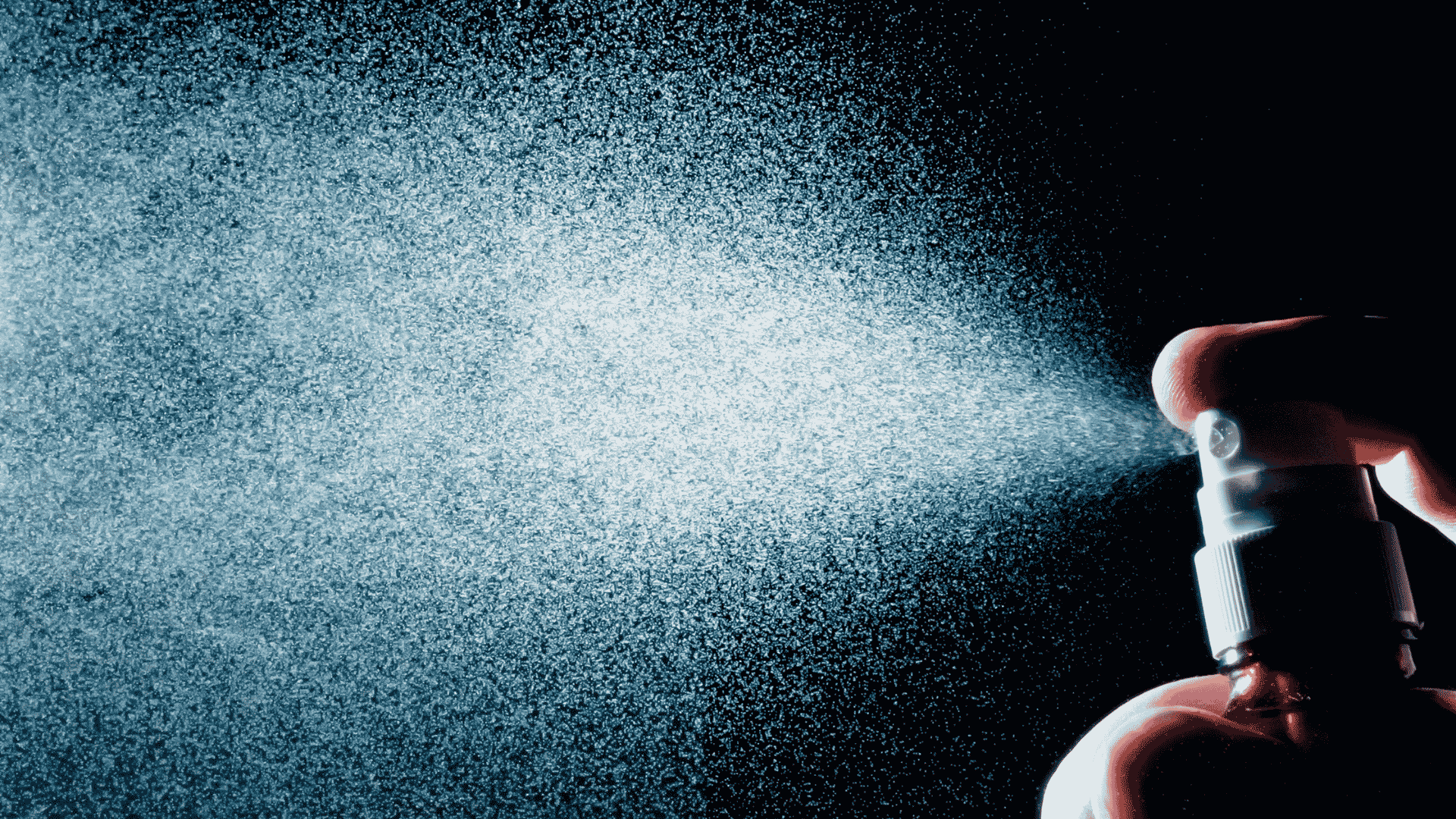
Almost every homeowner has done it. You spot a line of ants on the kitchen counter or a roach near the sink, grab a can from the hardware store, and spray until the pests stop moving. A few days later, they're back. If you've ever wondered why store-bought bug spray doesn't work the way the label seems to promise, you're asking a fair question, and the answer has less to do with the product than with how pests actually live.
Over-the-counter sprays aren't useless, and trying to handle a problem yourself isn't a mistake. They're built for a narrow job, though, and most indoor pest problems are bigger than that job. Below, we'll walk through why DIY sprays often fall short, when they're perfectly fine to use, and what changes when a professional takes a look.
Quick Summary
- Most sprays kill the pests they touch, but the pests you see are a small part of the population hiding in walls, soil and voids.
- Some sprays repel pests instead of killing them, which can move the problem to a new spot in your home.
- German cockroaches have built resistance to many insecticides found in sprays and aerosols, and foggers don't reach where they hide.
- DIY is reasonable for a few stray insects or a one-time seasonal visitor, especially paired with sealing and sanitation.
- A professional starts with an inspection to find the root cause, then prescribes treatment matched to the pest and the conditions.
Why Store-Bought Bug Spray Doesn't Work on Most Infestations
The short version: a spray treats what you can see, and pests are experts at staying out of sight. A can of contact insecticide is designed to knock down insects on a surface. That's satisfying in the moment, but it rarely touches the source of the problem. Here are the three gaps we see most often.
You're Spraying the Workers, Not the Colony
Take ants. The ants marching across your counter are foragers, a small slice of a colony that may be nesting in a wall void, under a slab or out in the yard. Killing the foragers doesn't affect the queen, who keeps laying eggs and replacing the workers you sprayed. The University of California's IPM program explains that spraying around a foundation kills only foraging ants without killing the colony and the queens, and foragers are typically a small share of the colony.
That's why the "spray, wait, spray again" cycle feels so familiar. You aren't doing anything wrong. You're just working on the visible end of a much larger system.
Repellent Sprays Can Push Pests Around
Many store-bought products repel insects as much as they kill them. That sounds like a good thing until you realize a repelled pest doesn't disappear. It finds another path, another food source or another room. Ants that hit a sprayed baseboard may simply detour to the other side of the kitchen.
With some species, disturbance can make things worse. Pharaoh ants, a tiny species that nests indoors, can "bud" when they're disturbed, meaning part of the colony, with queens and young, moves off to start new nests. Research summarized by the National Pest Management Association found that over-the-counter aerosol products can trigger this budding, so one colony can become several.
Coverage: The Spray Rarely Reaches Where Pests Live
Pests spend most of their time in places a spray nozzle can't reach: inside wall voids, behind appliances, under insulation, beneath floors and in the soil along the foundation. A surface spray along the baseboard covers the edge of the problem, not the middle. Outdoors, the same UC guidance notes that a perimeter spray gives only temporary control, and ant numbers soon build back up.
There's also the question of what you're spraying for. Different pests respond to different approaches, and a general-purpose product isn't matched to a specific species, its nesting habits or the conditions inviting it in. Without that match, even a well-applied product is partly a guess.
Cockroaches: Where Over-the-Counter Products Struggle Most
If there's one pest that shows the limits of store-bought sprays clearly, it's the German cockroach. This small roach lives indoors, often in kitchens and bathrooms, and it hides in dark, warm cracks close to food and water. That combination makes it one of the hardest household pests to clear with off-the-shelf products.
Resistance Is Real With German Cockroaches
NC State Extension reports that many German cockroach populations have developed resistance to the insecticides commonly found in sprays and aerosols. Resistance builds when the roaches that survive a treatment reproduce and pass that tolerance on. Over time, the product that once worked starts to lose its punch.
The same guidance notes that sprays can give a quick, temporary knockdown but may even make the problem worse by repelling and dispersing roaches to other parts of the home. So a homeowner who sprays harder and more often can end up with roaches in more rooms, not fewer. It's a frustrating cycle, and it's not a sign that anyone was careless.
Why Foggers Miss the Target
Total-release foggers, often called "bug bombs," seem like the heavy-duty answer. According to NC State Extension, they're ineffective for cockroach control because they don't penetrate the cracks and hidden areas where roaches live and breed. The mist settles on open surfaces, like countertops and floors, while the roaches stay tucked away.
Foggers also carry real risks, including flammability hazards and exposure to the chemicals released. For a pest that hides this well, a product that coats open surfaces is aimed at the wrong place.
When DIY Pest Control Is a Reasonable Choice
We want to be clear about this: there are plenty of times when handling things yourself makes sense. Not every bug is an infestation, and not every pest sighting calls for a service visit. Honest advice means telling you when you probably don't need us.
Good Times to Handle It Yourself
A do-it-yourself approach is often fine in situations like these:
- A few stray insects. A single spider in the garage or a beetle near the back door is usually just passing through.
- A one-time trail with an obvious cause. A few ants drawn to a spill often fade once the spill is gone and the entry point is sealed.
- Seasonal visitors that leave on their own. Some insects wander in during a weather change and don't settle in.
- Prevention, not treatment. Sealing, cleaning and yard upkeep are some of the most useful steps you can take, and they don't require any product at all.
If you do use a store-bought product, read the whole label first and follow it exactly. The label explains where the product can go, how to use it safely around children and pets, and which pests it's meant for. More product isn't better, and mixing products can backfire. Extension guidance for both ants and cockroaches warns against spraying where baits are in use, because the spray can keep pests from feeding on the bait.
Safe Steps That Help No Matter What
These habits make your home less inviting to pests whether you ever call a professional or not:
- Seal gaps around doors, windows, pipes and utility lines.
- Keep pantry food and pet food in containers with tight lids.
- Wipe up crumbs and spills, and take out kitchen trash often.
- Fix leaks and keep areas under sinks dry.
- Trim shrubs and branches back from the siding and roofline.
- Keep mulch, firewood and debris away from the foundation.
If pests keep showing up after you've done all of this, it's a strong sign the source is somewhere you can't see. Snap a photo or save a specimen in a sealed bag. That small step makes identification much faster.
What a Professional Changes
The biggest difference between a can of spray and a professional service isn't the product. It's the process. A pro treats your home as a system, figures out why pests are there and builds a plan around that answer.
It Starts With an Inspection, Not a Product
At Ready Pest Solutions, residential service begins with a free 60-minute attic-to-crawlspace inspection. We check the places most homeowners never see, such as plumbing penetrations and the spaces behind appliances. The goal is to find how pests get in, where they hide and what keeps them there.
Our co-owner, Philip Maready, is an Associate Certified Entomologist (ACE), and that training shapes how we work. Identifying the exact pest matters, because a German cockroach, a smokybrown cockroach and an ant trail each call for a different response. Once we know what we're dealing with, we explain what we found, and you decide what to do next.
Treatment Matched to the Pest and the Problem
After the inspection, we prescribe a treatment plan built for your home, not a one-size-fits-all spray. We use EPA-registered products selected for your specific situation and place them where pests actually live and travel. That targeted approach is the opposite of coating open surfaces and hoping something walks through it.
We also address the root cause. If a leak under a sink, a gap around a pipe or a cluttered storage area is feeding the problem, we point it out and talk through how to fix it. Treatment works better, and lasts longer, when the conditions that invited pests in are gone.
Follow-Up That Doesn't End After One Visit
Pests rarely give up after a single treatment, which is why our residential service doesn't stop at one visit. Your first service covers the interior and exterior, and quarterly follow-ups maintain your protection, with interior service available on request at no extra charge. If pests come back between scheduled visits, so do we, at no additional cost.
We assign technicians by area, so you'll usually see the same face each time. That consistency means the person treating your home knows its history. You can see how this works on our residential pest control page, and our article on year-round pest control vs. one-time visits covers why ongoing protection tends to win out over calling when you see a bug.
Frequently Asked Questions
Why do ants keep showing up after I spray?
The ants you spray are foragers from a colony that's usually hidden in a wall, under a slab or in the yard. Spraying the foragers doesn't reach the queen or the nest, so new workers replace the ones you killed. A lasting fix means finding the colony and the entry point. Our guide on what it takes to get rid of an ant infestation goes deeper on this.
Are bug bombs a good option for roaches?
For cockroaches, generally no. NC State Extension guidance says foggers don't penetrate the cracks where roaches hide, and they come with fire and exposure risks. A targeted approach that reaches harborage areas works far better.
Can store-bought sprays make a pest problem worse?
They can in some cases. Repellent sprays can push pests into new areas of your home, and with German cockroaches, sprays can scatter roaches and run into resistance. With Pharaoh ants, insecticides can trigger a colony to split into new nests.
Is it okay to try DIY pest control first?
Yes, for small or one-time problems. Sealing gaps, cleaning up food sources and fixing leaks are smart steps for any home. If pests keep returning after a couple of weeks, or you're seeing them in more than one room, it's time for a professional look.
How much does professional pest control cost?
Pricing depends on your home, the pests involved and the plan that fits. We keep it simple: start with a free inspection, and we'll give you pricing specific to your home with no pressure to sign up. You can learn about the free inspection and Ready Shield plans before you call.
Get a Straight Answer About Your Pest Problem
Store-bought sprays have their place, and there's no shame in trying them first. When pests keep coming back, though, it usually means the source is hidden, the species needs a different approach, or both. That's where an inspection pays off.
Ready Pest Solutions is a family-owned company based in Holly Springs, serving homeowners in Fuquay-Varina, Apex, Cary, Garner, Willow Springs, Raleigh and across Wake County. If you're tired of the spray-and-repeat cycle, contact Ready Pest Solutions and book a free inspection. You'll get a plain explanation of what's going on, and the next step is your call.