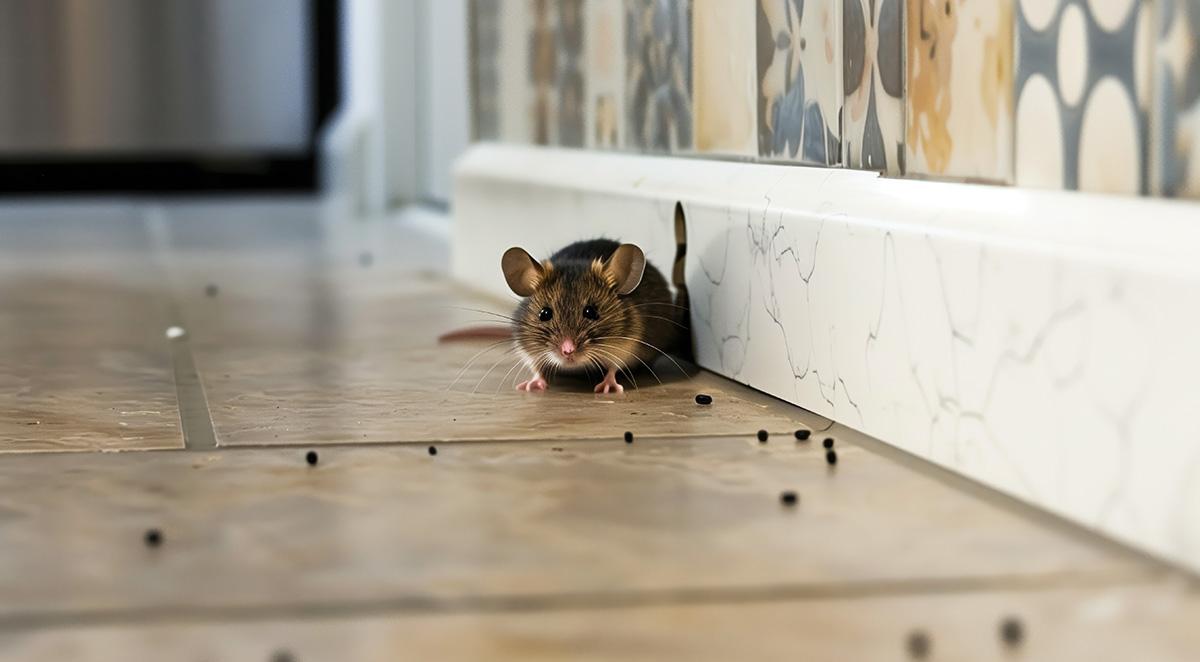
When the first cool nights of fall settle over Wake County, mice start looking for somewhere warmer to spend the winter, and your home is exactly what they have in mind. Understanding how mice get in the house is the first step to keeping them out, because a mouse does not need a door left open or an obvious hole in the wall. It needs a gap you would probably walk right past. The scale of the problem is easy to underestimate: according to the National Pest Management Association, rodents invade an estimated 21 million U.S. homes each winter, and the majority of those infestations begin in the colder months. The good news is that the same knowledge that explains how they get in also tells you how to stop them.
Quick Summary
- Mice move indoors in fall and winter seeking warmth, food, and shelter, not because your home is dirty.
- A house mouse can slip through a gap about a quarter of an inch wide, roughly the width of a pencil.
- The most common entry points are low and easy to miss: foundation cracks, utility penetrations, garage-door gaps, worn door sweeps, and vents.
- Attractants like accessible food, water, clutter, and woodpiles near the house make your property more inviting.
- Sealing entry points, not just trapping, is what keeps mice out for good. A professional inspection finds the gaps you cannot.
Why Mice Head Indoors Before Winter
Mice are not trying to invade your home so much as survive the season. As temperatures drop and outdoor food becomes scarce, they search for the three things every rodent needs: warmth, food, and a safe place to nest. A heated house with a stocked pantry and quiet, undisturbed corners checks every box. This is why rodent activity climbs sharply in fall and continues through winter, and why late summer and early fall are the ideal time to seal your home before the pressure begins.
It is worth clearing up a common misconception. A mouse problem is not a sign of a dirty home. Clean, well-kept houses get mice too, because the draw is shelter and the entry points are structural. Any home with small gaps in the right places is a candidate once the weather turns.
How Small a Gap Do Mice Really Need?
Smaller than most people believe. The Centers for Disease Control and Prevention notes that a mouse can fit through a hole about a quarter of an inch across, roughly the width of a pencil. Mice have flexible bodies and can flatten themselves to squeeze through openings that look far too small to matter.
They also gnaw. Rodents have front teeth that grow continuously, so a mouse can enlarge a promising crack or chew through soft materials to create an opening where none existed. That combination, a tiny starting gap plus the ability to widen it, is why sealing the small stuff matters so much.
The Most Common Ways Mice Get In
Most mouse entry points are near the ground and easy to overlook. When we inspect a home in Holly Springs or anywhere across Wake County, these are the spots we check first:
- Foundation cracks and gaps where the foundation meets the siding, especially as homes settle over time
- Utility and pipe penetrations, the openings where plumbing, electrical, gas, and cable lines pass through exterior walls
- Gaps under garage doors and along the sides, plus worn or missing weather seals
- Damaged or missing door sweeps on exterior doors. If you can see daylight under a door, a mouse can get through it.
- Vents that are unscreened or poorly fitted, including dryer, attic, soffit, and crawlspace vents
- Gaps around windows, particularly where caulk has cracked or pulled away
- Openings along the roofline, eaves, and where different building materials meet
Mice are also capable climbers, so entry points are not always at ground level. Wires, downspouts, and overhanging branches can give them a route to gaps higher on the structure.
What Draws Mice to Your House in the First Place
Sealing gaps is essential, but making your property less inviting helps too. Mice follow food, water, and cover, and a few habits around the yard and home can quietly roll out the welcome mat. Public health and pest management guidance consistently points to a handful of high-impact steps:
- Store pantry staples and pet food in sealed, hard containers rather than open bags or cardboard.
- Keep garbage in bins with tight lids and clean up crumbs, spills, and outdoor cooking areas.
- Move woodpiles well away from the house. The NPMA recommends storing firewood at least 20 feet from the home and raised off the ground.
- Trim shrubs, tall grass, and branches back from the exterior so they do not touch the walls or roof.
- Reduce clutter in garages, basements, and storage areas, which mice love for undisturbed nesting.
Signs Mice Are Already Inside
If mice have beaten you to the seal-up, the evidence usually shows before you ever see the animal. The CDC and pest professionals point to a consistent set of signs:
- Droppings, small and dark, along baseboards, in cabinets, or near food
- Gnaw marks on packaging, trim, or wiring
- Scratching or scurrying sounds inside walls, ceilings, or the attic, most often at night
- Nests made of shredded paper, insulation, or fabric tucked into hidden corners
- Greasy rub marks along walls and around entry points, left by oily fur
- A musky odor in enclosed spaces
Because mice reproduce quickly, a couple of animals can become an established problem in a matter of weeks, so acting early matters. For a closer look at the warning signs and what they mean, our guide on getting rid of mice is a useful companion to this article.
Where Mice Nest Once They Are Inside
Knowing where mice head after they get in helps you spot a problem early and understand why they are so hard to dislodge. Mice look for quiet, dark, undisturbed spots close to food, and a typical home offers plenty:
- Wall voids and the spaces behind cabinets, where they can move through the house unseen
- Attics and insulation, which offer warmth and nesting material in one place
- Behind and underneath large appliances like refrigerators, stoves, and washers
- Pantries, lower cabinets, and pantry corners near a food source
- Cluttered garages, basements, and storage areas where boxes sit undisturbed
Because mice stay hidden and travel along walls, you will usually find the evidence, droppings, gnaw marks, and rub marks, before you ever see the animal itself. Those trails are also what a professional uses to map how mice are moving and where they are getting in.
Why Sealing Beats Trapping Alone
Traps and bait address the mice that are already inside, but they do nothing about the next mouse that finds the same gap. That is why exclusion, physically sealing the openings mice use, is the foundation of lasting rodent control. Small gaps are best filled with steel wool packed in and held with caulk, since mice can chew through foam or plastic alone, while larger openings call for hardware cloth or metal. The goal is simple: close the routes in, then remove any mice already present.
This is exactly how we approach rodent work. Rather than dropping a few bait stations and moving on, we inspect the home from the crawlspace to the attic, identify every entry point, seal them, remove the rodents inside, and monitor to make sure the problem stays solved. You can read more about our residential approach on our home pest control page.
When to Call a Professional
A determined homeowner can seal many entry points, but mice are experts at finding the ones you miss, and some access points are difficult to reach or hard to identify without experience. If you are hearing activity in the walls, finding droppings, or simply want to get ahead of the season, a professional inspection is the fastest way to a home that stays mouse-free. A local team that knows the housing stock and seasonal patterns of Wake County will know where to look.
Frequently Asked Questions
When should I mouse-proof my home for winter?
Late summer and early fall, before the cold drives mice indoors. Sealing entry points ahead of the season is far easier than dealing with an active infestation once mice have moved in and started nesting.
Does having mice mean my house is dirty?
No. Mice are drawn to warmth and shelter, and they enter through structural gaps that have nothing to do with cleanliness. Clean, well-maintained homes get mice too. Good sanitation helps, but sealing entry points is the real key.
How do I know where mice are getting in?
Look low and near openings: foundation cracks, gaps around pipes and utility lines, the base and sides of garage doors, worn door sweeps, and unscreened vents. Many entry points are easier to spot from inside where pipes and wires pass through walls, though most originate outside. A professional inspection will find the ones that are not obvious.
Are mice actually dangerous, or just a nuisance?
They are more than a nuisance. The CDC notes that rodents can spread disease through their droppings, urine, and saliva, and they gnaw on wiring in ways that can create a fire risk. That is why early action is worthwhile.
Will sealing gaps really keep mice out?
Sealing is the most effective long-term step you can take, especially when paired with removing attractants. Trapping handles the mice present now, but exclusion is what prevents the next ones from getting in.
Get Ahead of the Season
Mice get into homes through gaps most of us never notice, and they do it in earnest as the weather cools across Wake County. The lasting solution is not more bait, it is understanding how they get in, sealing those routes, and removing any that made it inside. If you would rather not go looking for quarter-inch gaps around your foundation yourself, we are glad to help. Contact Ready Pest Solutions to schedule an inspection and head off winter's most common houseguest before it arrives.